Protecting SAE flanges
The four-bolt flanges behind high-flow hydraulics — and how to protect the face, the O-ring groove and the bolt holes during transport and storage.
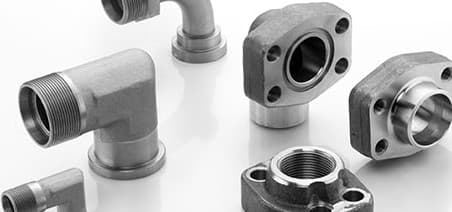
SAE flanges are how large hydraulic lines are connected, where a threaded fitting would be too large or too heavily loaded. They seal with an O-ring recessed into a flat flange face and clamped by four bolts. Because that face protrudes and easily takes a knock in transit, SAE flange protection is all about shielding the face, the O-ring groove and the bolt holes until the moment of assembly.
What is an SAE flange?
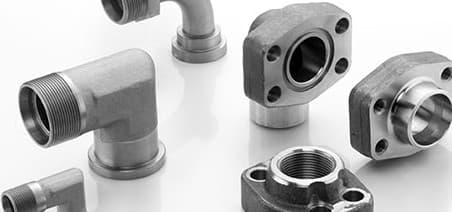
SAE flange connections are defined in SAE J518 (ISO 6162) and are used for larger diameters and higher flows than threaded fittings. A flat flange head seals with an O-ring in the face and is held against the mating face by a four-bolt split clamp. They come in two pressure series: Code 61 (standard) and Code 62 (high pressure). Because the flange head protrudes, this is one of the most exposed connections during transport and storage.
How it seals
- Flat flange face with an O-ring groove
- Four-bolt split clamp for the mechanical connection
- Code 61 (standard) and Code 62 (high-pressure series)
- Used for high flows and large diameters
Where SAE flanges are used
Flanges take over where the flow is too high for threaded fittings; they therefore sit on the largest lines. In construction and mining they form the main pump and motor ports of excavators and dump trucks. On industrial presses they make the high-flow connections to large-bore cylinders. On mobile cranes they carry the high-pressure main and slew drive lines, and on high-flow power units they connect the pump and tank lines.
How to check this is your application: if your connection is a flat, four-bolt flange head with an O-ring in the face, then SAE flange protection is the right family. Choose the protection by size and pressure series (Code 61 or Code 62).
What the protection must cover
You judge flange protection on how well the exposed face, the groove and the bolt holes are covered. The risks it protects against:
- Face damage: impacts on the machined sealing face, which cause leaks
- Dirt: dirt and moisture in the O-ring groove and the bolt holes
- Corrosion: moisture attacking the flange face in storage
- Transport damage: the protruding head taking knocks in transit
SAE flanges at a glance
| Characteristic | Value |
|---|---|
| Standard | SAE J518 / ISO 6162 |
| Series | Code 61 (standard pressure), Code 62 (high pressure) |
| Seal | O-ring in the flange face |
| Clamp | Four-bolt split flange |
| Sizes | 1/2" to 5" nominal |
| Application | High flows and large diameters |
Does this protection suit your application?
Before ordering, check that SAE flange protection matches your situation:
- Connection: flat four-bolt flange head with O-ring in the face
- Series and size: Code 61 or Code 62 and nominal size known and matching
- Environment: transport and outdoor or damp storage, where flanges take knocks
- Medium: mineral oil or biodegradable hydraulic fluid
- Phase: production, storage and transport, or service and maintenance
Related guides
Recommended protection
These categories fit SAE flange connections:
Frequently asked questions
How does an SAE flange seal?
With an O-ring recessed into the flange face and clamped against a flat mating face by four bolts. It suits larger diameters and higher flows than threaded fittings.
What is the difference between Code 61 and Code 62?
Both are four-bolt SAE J518 flanges. Code 61 is the standard pressure series and Code 62 the high-pressure series, with heavier flanges and a different bolt pattern.
What needs protecting on an SAE flange?
The flange face, the O-ring groove and the bolt holes. The protection shields the protruding flange head from impacts, dirt, moisture and corrosion.
Where are SAE flanges used?
On high-flow, large-diameter connections such as pump and motor ports, cylinders and main lines in construction and industrial hydraulics.
How do I get the right protection for an SAE flange?
Start with what needs covering on an SAE flange: the flange face, the O-ring groove and the bolt holes. Choose protection for your size and pressure series (Code 61 or Code 62) — the recommended protection above is the starting point. Then request free samples or a quote; our specialists will confirm the exact parts for your application.