Protecting JIC 37° and UNF fittings
The 37° flare that seals metal-to-metal, widely used on construction and mobile machinery — and how to keep the flare seat and UNF thread undamaged.
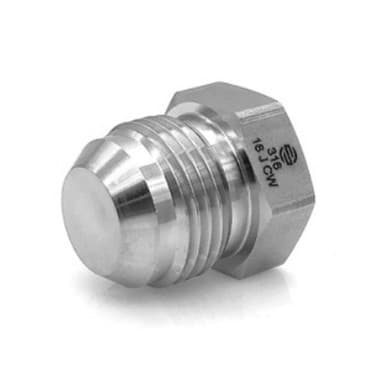
JIC is the 37° flare fitting you encounter most on North American and mobile hydraulics. It seals metal-to-metal, without an O-ring, so the entire seal depends on an undamaged flare seat. One small dent or scratch on that cone already leaks — which is why JIC protection covers the flare seat and the UNF thread together.
What is a JIC fitting?
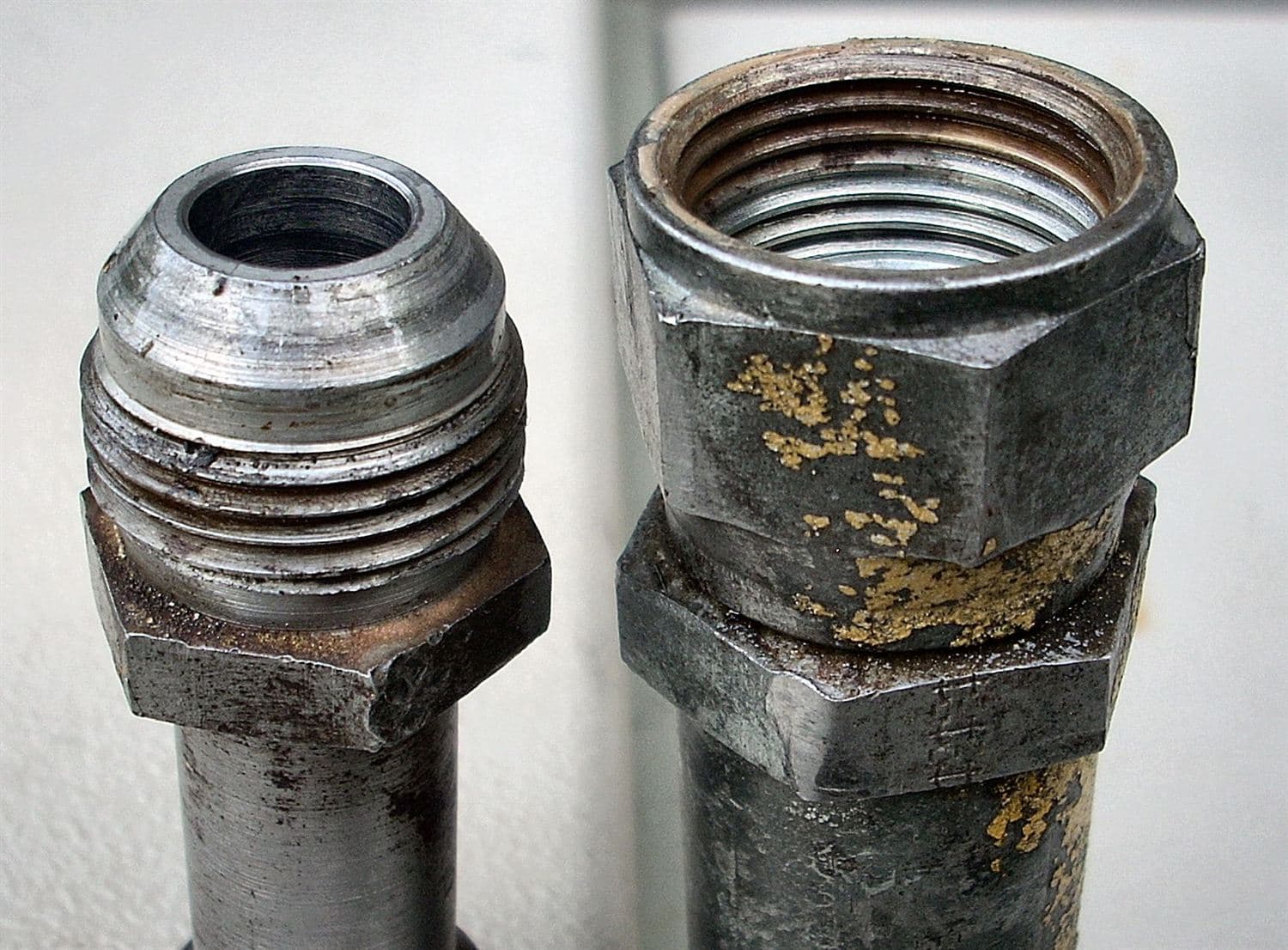
JIC fittings are based on the SAE J514 standard and are common in North American hydraulics. Unlike DKO, JIC seals metal-to-metal via a 37° flare: the sealing face is machined into the fitting itself and no O-ring is needed. The UNF thread clamps the flare against its mating seat.
How it seals
- 37° flare seat as the sealing face
- Metal-to-metal seal, without an O-ring
- UNF thread for the mechanical clamping force
- Quick to assemble and reusable
Where JIC fittings are used
JIC is the standard flare fitting in North America and stocked worldwide; it therefore appears on every machine built to SAE practice. In construction it feeds the auxiliary and loader circuits of skid steers and backhoe loaders. On North American agricultural machinery it serves the header drives of combines and the lines of seed drills. In fluid power it connects power units and test rigs, and in service it is the reusable hose end of field-made hose assemblies.
How to check this is your application: if your fitting has a 37° flare cone and a UNF thread, and it seals without an O-ring, then JIC protection is the right family. Choose the cap by dash size.
What the protection must cover
With a metal-to-metal seal, the flare seat is the seal; you therefore judge the protection on whether that cone and the thread are covered. The risks it protects against:
- Mechanical damage: dents and scratches on the 37° flare seat, where the smallest mark already leaks
- Contamination: grit and moisture on the seat and thread before assembly
- Corrosion: moisture attacking the machined flare during storage
- Thread damage: burrs that cause cross-threading and insufficient clamping force
JIC at a glance
| Characteristic | Value |
|---|---|
| Standard | SAE J514 |
| Thread | UNF parallel |
| Sealing angle | 37° flare |
| Seal | Metal-to-metal, without O-ring |
| Sizes | Dash -4 to -32 (1/4" to 2") |
| Region | North America and worldwide |
Does this protection suit your application?
Before ordering, check that JIC protection matches your situation:
- Connection: 37° flare cone with UNF thread, without O-ring
- Size: dash size known and matching (-4 to -32)
- Environment: outdoor, dusty or damp storage and transport
- Medium: mineral oil or biodegradable hydraulic fluid
- Phase: production, storage and transport, or service and maintenance
Related guides
Recommended protection
These categories fit JIC 37° connections:
Frequently asked questions
How does a JIC fitting seal?
Metal-to-metal on a 37° flare. The UNF thread clamps the flare against its seat and no O-ring is used, so the flare face must stay undamaged.
In which sectors are JIC 37° fittings used?
On construction machinery, mobile equipment, hose assemblies and general industrial systems. JIC is the standard flare fitting in North America.
What needs protecting on a JIC connection?
The 37° flare seat and the UNF thread. Because the seal is metal-to-metal, a single scratch or dent on the cone already leaks — so the cap covers both.
Is JIC the same as AN?
They share the 37° flare angle and are often dimensionally interchangeable, but AN uses tighter tolerances and different materials for aerospace and racing. Both use the same flare and thread protection.
How do I get the right protection for a JIC fitting?
Start with what needs covering on a JIC fitting: the 37° flare seat and the UNF thread. Choose a tapered cap for your dash size — the recommended protection above is the starting point. Then request free samples or a quote; our specialists will confirm the exact parts for your application.