
Common hydraulic connections: DKO, JIC, ORFS and SAE ORB
DKO, JIC, ORFS and SAE ORB are the most common hydraulic connections. Learn how each connection seals — 24° cone, 37° flare, O-ring face seal or O-ring boss — and how to identify the right fitting.
9 July 2026 · 7 min read
Choosing the right hydraulic connection is essential for system reliability, leak prevention and compatibility between components. The key differences come down to three things: thread type, sealing method and connection geometry — and each of them can strongly affect performance. The most common hydraulic connections are DKO, JIC, ORFS and SAE ORB. Understanding how they differ helps maintenance teams, engineers and buyers identify the right fitting faster and avoid costly assembly errors.
DKO: 24° cone connections
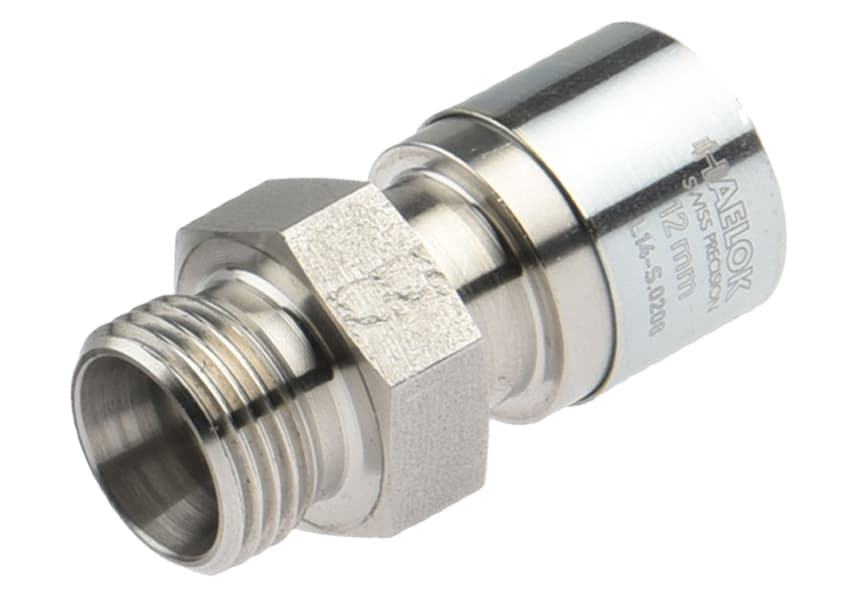
DKO, short for Deutscher Konus, is a metric hydraulic connection based on the DIN 2353 standard. The connection is widely used across Europe in industrial machinery, agricultural machines and mobile hydraulics. The seal forms via a 24° cone combined with an elastomer O-ring, providing reliable leak prevention under high pressure.
Typical characteristics
- Metric thread
- 24° cone sealing face
- Seal supported by an O-ring
- Common in European hydraulic systems
Typical applications
- Agricultural machinery
- Mobile hydraulics
- Industrial installations
- Hydraulic power units
DKO fittings are often chosen where robust sealing and compatibility with metric hydraulic systems are required.
JIC: 37° flare connections
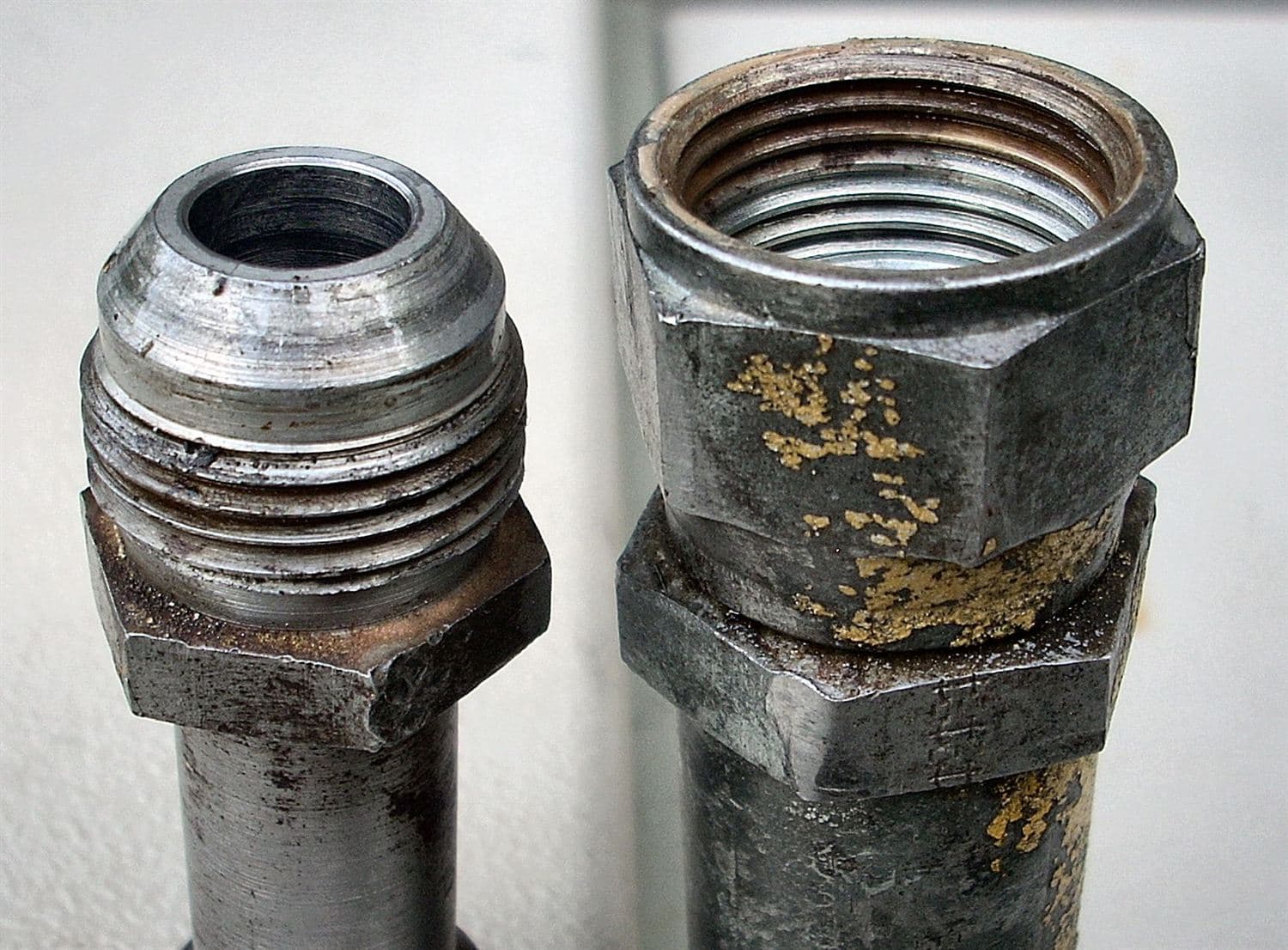
JIC fittings are based on the SAE J514 standard and are common in North American hydraulic systems. Unlike DKO connections, JIC fittings form a metal-to-metal seal via a 37° flare. Because the sealing face is integrated into the fitting geometry itself, no O-ring is needed.
Typical characteristics
- 37° flare connection
- Metal-to-metal seal
- UNF thread
- Easy assembly and disassembly
Typical applications
- Construction machinery
- Mobile equipment
- Hydraulic hose assemblies
- Industrial hydraulic systems
JIC fittings remain popular for their simplicity and wide availability.
ORFS: O-ring face seal
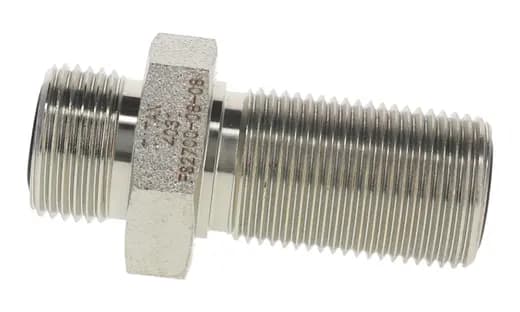
ORFS, or O-Ring Face Seal, was developed for superior leak-tightness in demanding hydraulic environments. The connection seals by compressing an O-ring against a flat sealing face. This design minimises leakage and performs excellently in systems with vibration, pressure fluctuations and dynamic loads.
Typical characteristics
- Flat face seal design
- O-ring in the face of the fitting
- Parallel thread
- Excellent leak prevention
Typical applications
- Heavy mobile equipment
- Construction machinery
- High-pressure hydraulics
- High-vibration applications
ORFS connections are often specified when leak prevention is a critical requirement.
SAE ORB: SAE O-ring boss
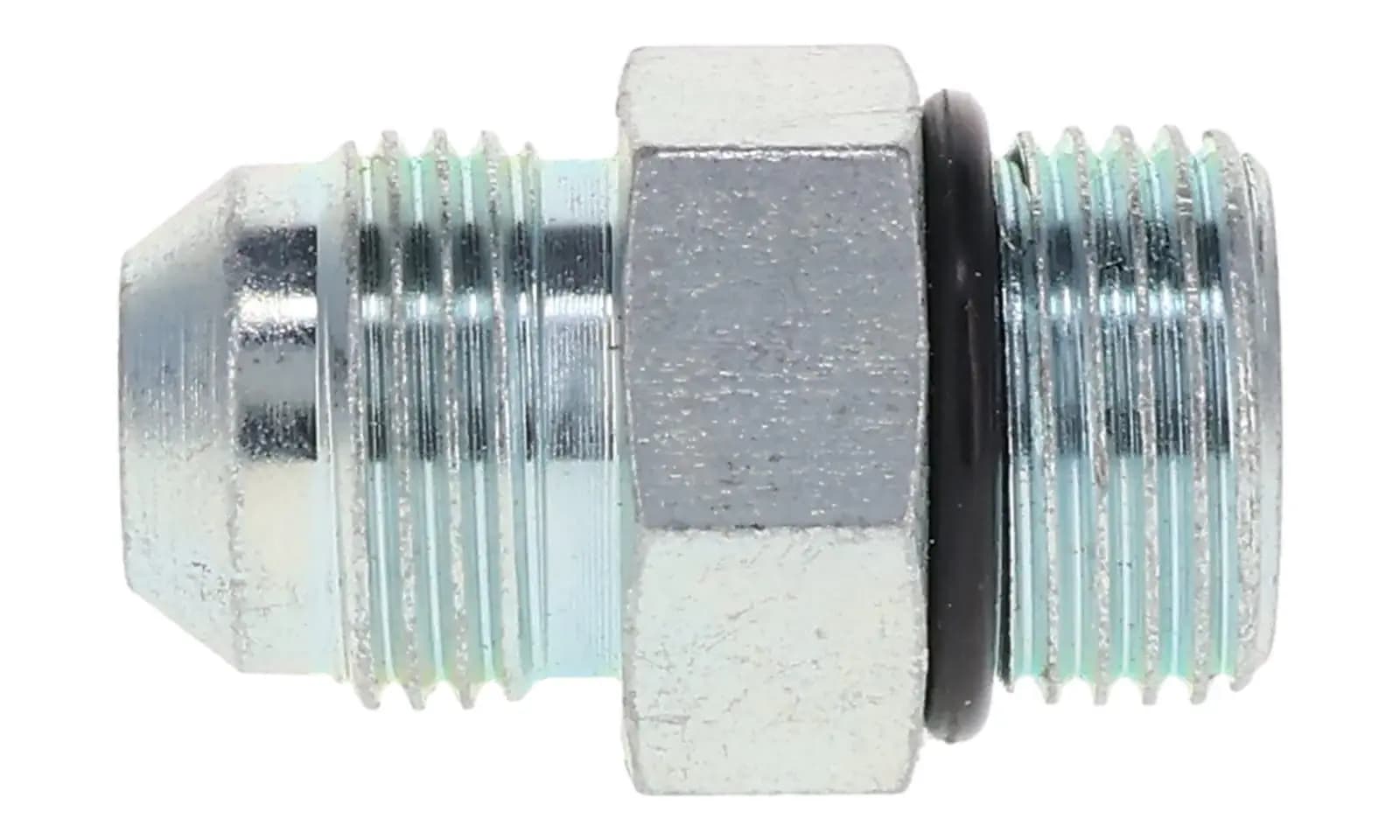
SAE ORB connections are mainly used as port connections on hydraulic manifolds, pumps, valves and cylinders. The connection uses a parallel thread, while the seal comes from an O-ring close to the fitting shoulder. Unlike tapered thread systems, the thread itself provides no sealing.
Typical characteristics
- Parallel thread
- O-ring at the fitting shoulder
- Reliable port sealing
- Easy assembly and maintenance
Typical applications
- Hydraulic manifolds
- Pumps and motors
- Valves
- Hydraulic cylinders
SAE ORB connections are widely used where reliable port sealing and serviceability matter.
DKO, JIC, ORFS and SAE ORB compared
Although all of these connection types are used in hydraulic systems, they differ greatly in how they achieve a leak-free seal. The overview below puts the standard, thread type, sealing principle and typical application of each connection side by side — useful for quick selection, purchasing and cross-referencing.
When identifying a connection, the sealing method is often a more reliable indicator than the thread itself. Two fittings can have similar thread dimensions and yet use completely different sealing principles.
Choosing the right hydraulic connection
Choosing the right hydraulic fitting starts with three key characteristics:
- Thread type and size
- Sealing method
- Connection geometry
Incorrect identification leads to leakage, damaged components and unnecessary downtime. That is why many maintenance teams first establish whether the connection uses a cone seat, flare, face seal or O-ring port seal before choosing a replacement fitting or adapter. Unsure about the size? Then follow the step-by-step method in identifying and measuring a connection.
Identify first, then protect. Once you know the sealing principle, the matching cap or plug keeps the cone, flare or sealing face clean and undamaged during storage, transport and maintenance.
Step 3 · Choose your protection