
Choosing machine feet: mounting, load, foot and floor
A machine foot only does its job when four things are right: how it is fixed to the machine, the load it carries, the foot material and the floor it stands on. Work through them step by step.
9 July 2026 · 5 min read
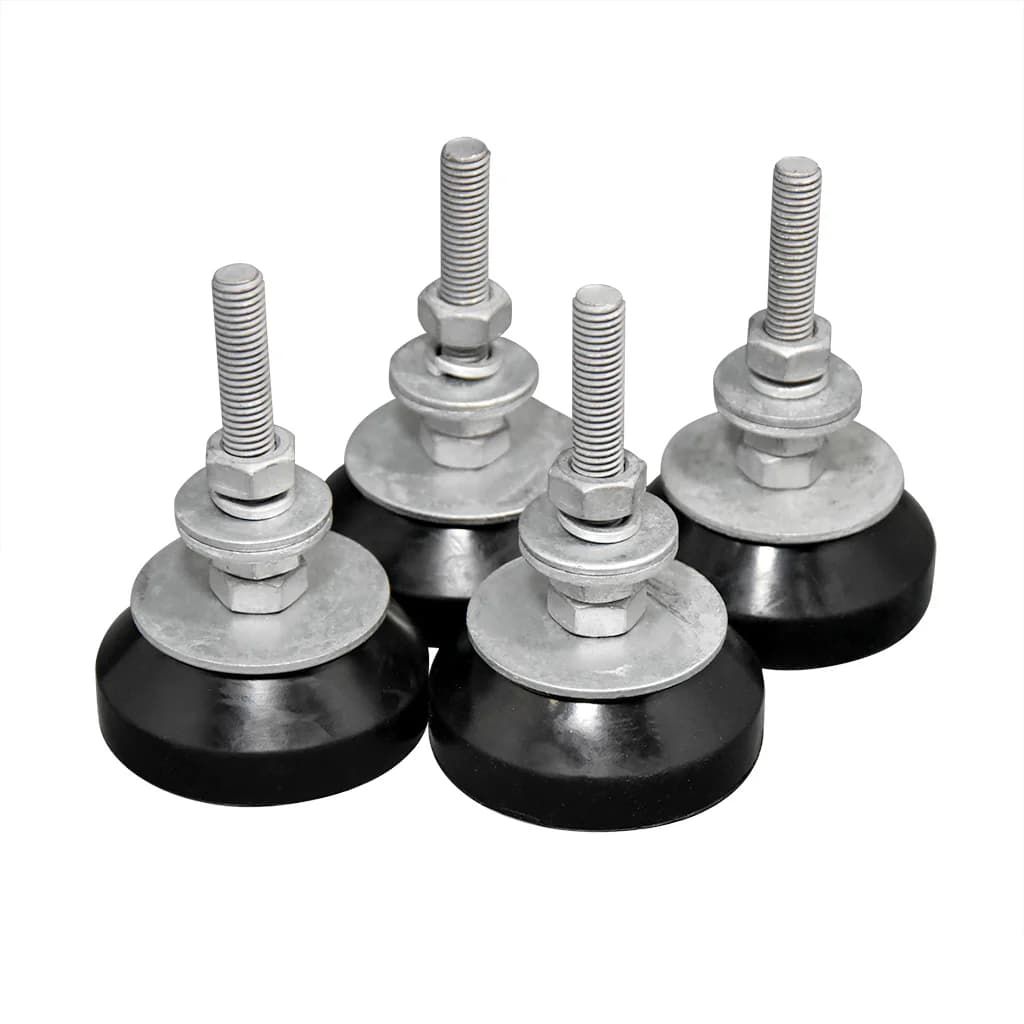
A machine foot looks simple, but the wrong choice soon shows: threads that strip, a foot that sinks into the floor, a foot that cannot absorb the unevenness, or one that rusts away in a washdown zone. Get four decisions right and the foot keeps the machine level and firmly in place for its entire service life.
1. The mounting: stud or internal thread?
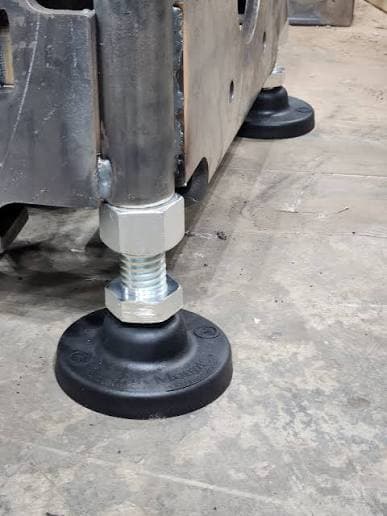
First determine how the foot will be fixed. A foot with a fixed stud has an external thread that screws into a tapped hole or frame; a foot with an internal thread accepts a stud or bolt coming down from the machine. Match the thread the machine already has and then choose the size: studs typically run from M8 to M30 — the larger the thread, the more load it carries and the stiffer the connection.
The spindle length determines your adjustment range. Choose enough thread to take up the floor and still let the lock nut engage, but not so much that a long, unsupported spindle can flex under load. A lock nut against the frame prevents the setting from drifting once the machine is running.
2. The load per foot
Divide the machine weight by the number of feet, but do not stop there. Weight is rarely distributed evenly: a motor, pump or heavy head loads one corner more than the rest. Size each foot for the most heavily loaded corner, not the average, and keep a margin for the dynamic forces of the running machine. Rule of thumb: choose a foot rated comfortably above that value rather than exactly at it. Our guide on load capacity and safe mounting walks through the calculation step by step.
3. The foot material
The base determines how much load it can spread, how it keeps its grip and how it withstands the environment.
| Base | Suitable for | Characteristics |
|---|---|---|
| Reinforced nylon | Light to medium loads | Non-marking, corrosion-free, good chemical resistance, economical |
| Zinc-plated steel | Medium to heavy loads | Rigid on the floor, suitable for bolting down or grouting in, optionally with a rubber pad |
| Stainless steel | Food & washdown | Sealed and cleanable, grade 304 or 316 for hygiene and corrosion resistance |
A larger base diameter spreads the load over more floor area; that matters most on soft or coated floors.
4. The floor and the environment
Finally, read the floor. An uneven or sloping floor calls for an articulating ball-joint foot, so the entire pad touches the floor instead of one edge. A soft or coated floor calls for a larger base, or a pad, to spread the pressure. If the machine vibrates, an anti-vibration levelling foot adds a vulcanised rubber element, so you level and isolate in one go. And in food or washdown zones, only a sealed stainless steel foot survives the cleaning regime.
Measure, then distribute the load. Adjust every foot so it carries weight before you tighten the lock nuts. A machine resting on three of its four feet wobbles, overloads its own frame and disturbs precision — even if each foot looks fine on its own.
Feet for every machine and floor