
Levelling a machine on an uneven floor
A machine is only as accurate as its foundation. This is a repeatable method to get every foot loaded, set the machine exactly level and lock the setting in.
9 July 2026 · 5 min read
Few floors are truly flat. Level a machine carelessly and it rests on three of its four feet: it rocks under load, stresses its own frame and loses precision. The solution is not force but method. Load every foot, level across both axes and then lock the setting.
Why levelling matters
A level, fully supported installation keeps the frame free of stress, holds tolerances on machine tools, prevents a base frame from twisting and lets anti-vibration elements work as intended. It also prevents the creeping damage of a machine that flexes a little with every cycle.
What you need
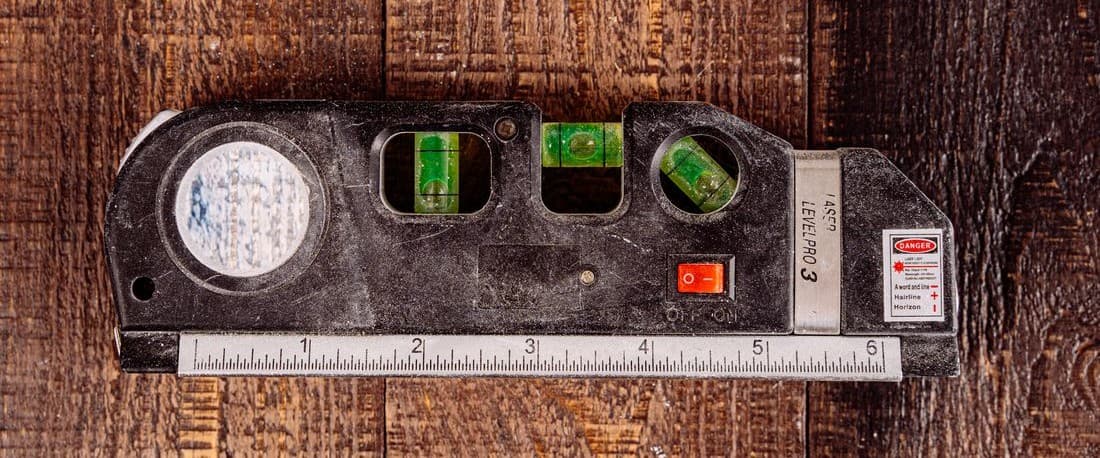
A precision spirit level or machinist's level (a builder's level is rarely fine enough for machine tools), a spanner for the feet and lock nuts, and the right machine feet for the load. Thin shims are a last resort, and only on very poor floors.
Step by step
Work in this order and it will be right first time:
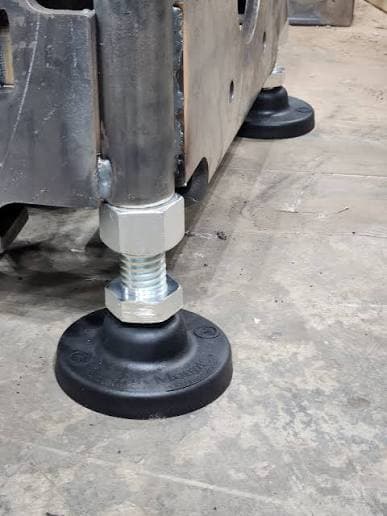
- 1. Start in the middle of the range. Turn every foot to roughly the middle of its thread, so you have room to go both up and down.
- 2. Rough levelling. Bring the machine roughly level by eye and with the spirit level on the bed.
- 3. Load every foot. Adjust until no foot is loose. Push against every corner: nothing should rock. This eliminates "soft foot", where one foot floats and the frame bridges the gap.
- 4. Fine levelling across two axes. Place the level lengthwise and then across, and adjust opposite feet in small, equal steps until both directions are level.
- 5. Lock and re-check. Tighten the lock nuts without disturbing the setting, then check again with the level — tightening can shift the setting.
Uneven, sloping and soft floors
On a sloping or cast floor, a rigid foot touches the floor on one edge only. An articulating ball-joint foot tilts with the floor, so the entire pad makes contact and spreads the load — more stable and kinder to the floor. On a soft or coated floor, spread the pressure with a larger base or a pad, so the foot does not sink in or leave marks. On heavy machine tools, the feet are often grouted in after levelling, locking the setting in permanently.
Check again after settling. New installations — and floors with give — move during the first days of use. A brief re-check a week later catches the settling before it shows up as wear or vibration in the work.
The right foot for your floor