
Anti-vibration mounts explained
A rubber-metal anti-vibration mount isolates vibration and anchors the machine in one part. The art is matching the rubber to the weight resting on it.
9 July 2026 · 4 min read
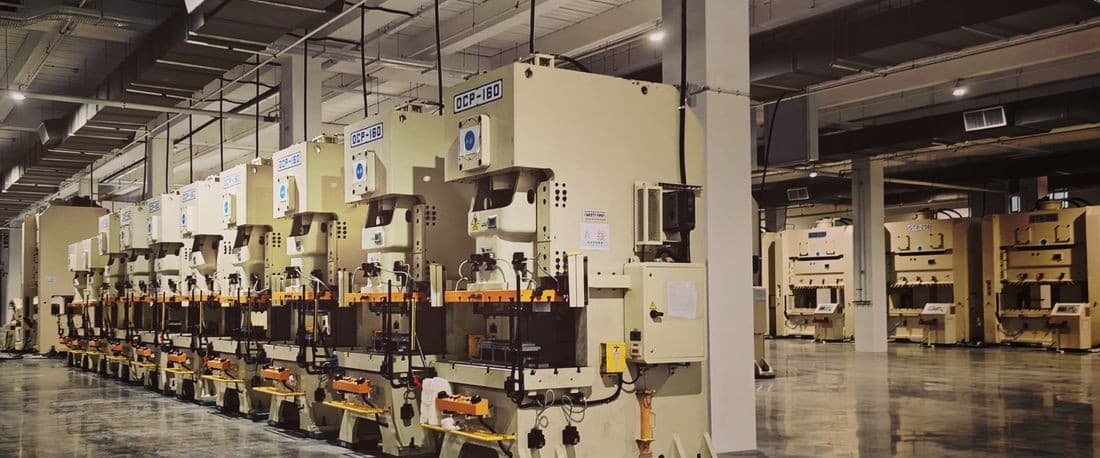
An anti-vibration mount is a block of rubber vulcanised between metal fixing parts. Install one between the machine and the floor and it does two things at once: the rubber flexes and keeps vibration out of the structure, and it holds the machine firmly in place so it cannot drift. Performance comes down almost entirely to choosing the right rubber for the load.
What an anti-vibration mount is
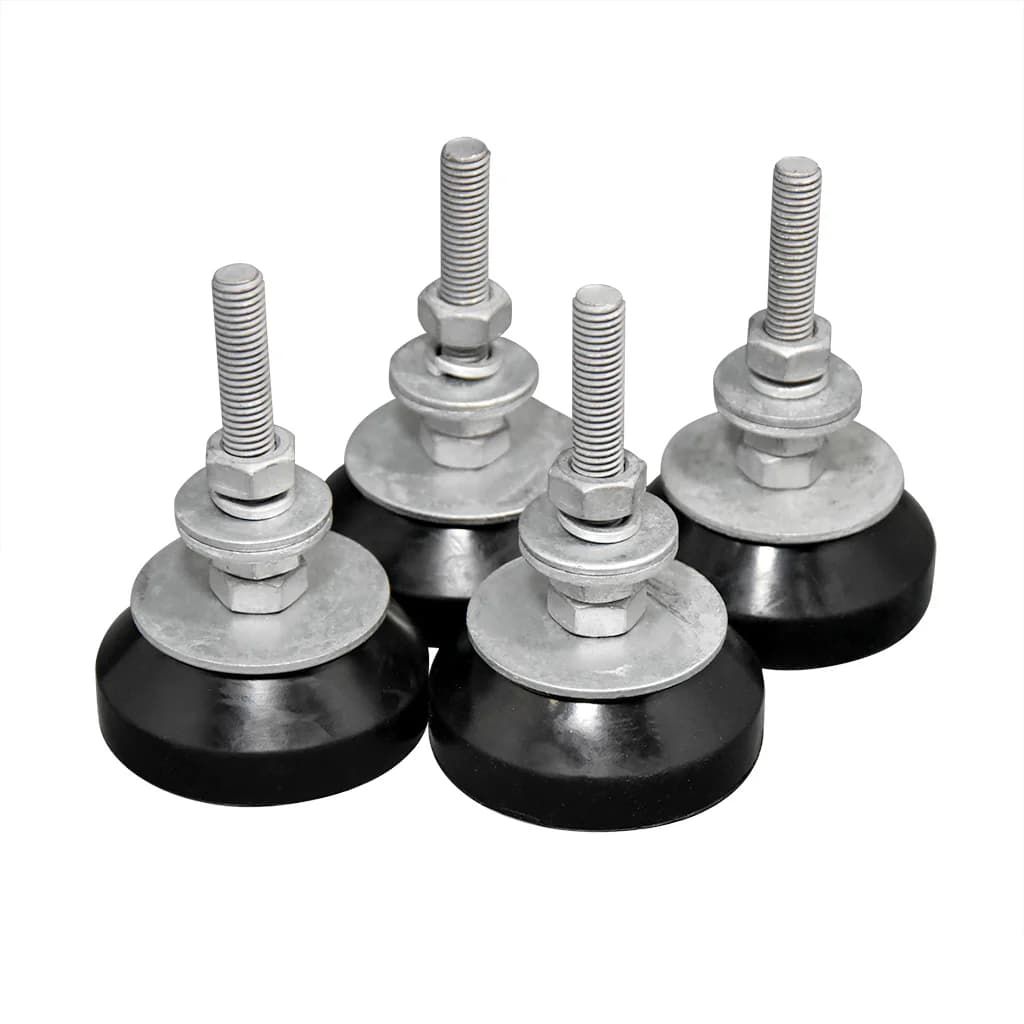
Because the machine and the floor only touch each other through the rubber, there is no stiff metal route for vibration to travel along. That same rubber, in compression and shear, also resists sideways movement of the machine — which is exactly what stops a vibrating machine from slowly "walking" across the floor.
Stud configurations
Mounts are named after what sits on each face:
| Type | Fixing | Typical application |
|---|---|---|
| Stud / nut (M/F) | Stud on one side, threaded hole on the other | General machine installation |
| Stud / stud (M/M) | A stud on both faces | Through-bolting frame and floor |
| Nut / nut (F/F) | Threaded hole on both faces | Bolts coming from both machine and foundation |
| Cylindrical (bobbin) | Studs on the ends of a rubber cylinder | Panels, fans, small machines; works in multiple directions |
Choose the configuration that matches the threaded holes in your machine and the floor fixing you can use.
Rubber hardness and load
Rubber hardness is expressed in Shore A: the higher the number, the harder the rubber. That value defines the trade-off every mount revolves around:
- Softer rubber (lower Shore) isolates better, because it gives a lower natural frequency, but carries less load before it is crushed flat.
- Harder rubber (higher Shore) carries more load, but isolates less.
Most machine mounts sit in the range of 40 to 70 Shore A. The right number is the one that matches the actual weight on that single mount — which is why the load per mount must be determined first.
Sizing a mount
Determine the load per mount (see load capacity and safe mounting), allowing for an uneven weight distribution. Then choose a mount and hardness at which the rubber settles into its intended deflection under that load: not so little that it stays stiff and passes everything through, and not so much that it is crushed solid. A mount loaded within its design range gives the low natural frequency that does the isolating work — the principle covered in reducing vibration and noise. Also keep a margin for dynamic loads from the running machine, which exceed the static weight.
Match the hardness to the weight per mount, not to the machine. The same machine on four mounts and on six mounts needs different rubber. Send us the weight and the number of fixing points, and we will determine the Shore hardness for you.