
Heat-resistant protection for hydraulic components
Hydraulic components face high temperatures during stoving, coating and operation. Heat-resistant caps, plugs and flange protectors shield threads, bores and sealing faces where standard plastic fails — and this is how to choose them.
9 July 2026 · 6 min read
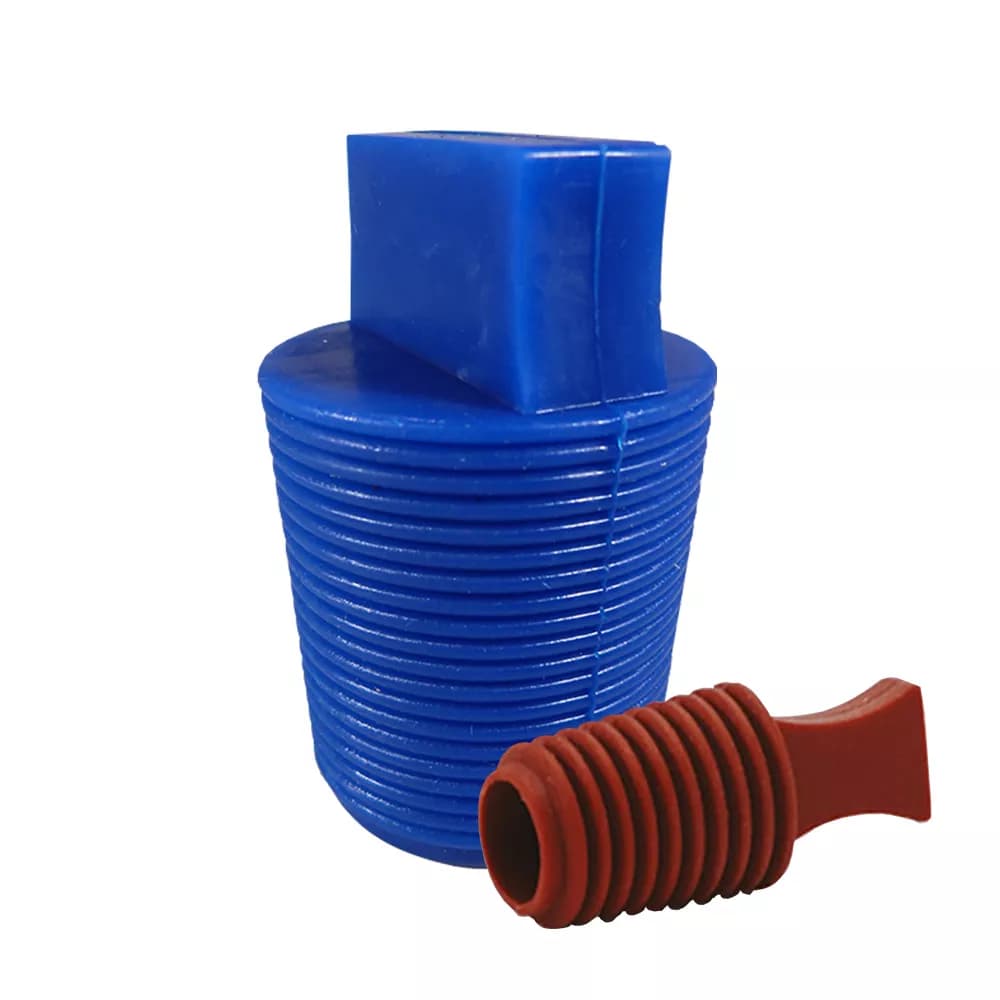
Protective caps and plugs are usually chosen on size and fit. But as soon as a component sees real heat — in a stoving oven, on a paint line, during heat treatment, or simply running hot in service — temperature becomes the deciding factor. Standard polyethylene protection is not made for that, and when it fails, it fails at the worst possible moment: with the part already in the oven or in the machine. Heat-resistant protection is a separate, specialist category designed for exactly these conditions — and choosing it deliberately makes a big difference in quality and cost.
Where heat puts hydraulic components at risk
Hydraulic parts regularly pass through or remain in high-temperature conditions:
- Surface treatment. Powder coating, wet painting and e-coating all end in a stoving or curing oven, typically 160–200 °C. Threads, bores, cone seats and flange faces must be masked so paint or powder never reaches them — but the masking has to survive the oven too.
- Heat treatment & passivation. Processes that deliberately raise the component temperature, while openings still have to stay clean and sealed.
- Hot operating environments. Components near engines, exhausts, ovens or hot hydraulic oil, where protection fitted for storage or transport may also see prolonged heat.
In every case the protection has two jobs at once: keeping contamination out and surviving the temperature while doing so.
Why standard plugs are not enough
Ordinary protective caps and plugs are made from polyethylene (PE/LDPE). They offer excellent value for general sealing and storage, but their usable temperature limit is low: typically around 80 °C. Send them through a stoving oven and they soften, sag, shrink or melt. When that happens, they can:
- Deform and let paint, powder or dirt through to the surface they were masking
- Bake onto the component or leave residue that has to be cleaned off — or the part is rejected
- Lose their grip and fall off, leaving the port completely unprotected
That is exactly why heat-resistant protection is a range of its own, not a variant of the standard plugs: the material, the temperature rating and the way you select it are different.
What we offer: heat-resistant masking caps & plugs
Our heat-resistant range is built for high temperatures. These protectors are made from materials such as silicone and other heat-resistant compounds and keep their shape, grip and sealing function at temperatures far beyond what standard plastic can handle — depending on the grade, typically up to the 200 °C+ range. The range covers the same protection points you already mask and seal, but in a heat-resistant version:
- Heat-resistant caps & plugs: silicone masking caps and plugs for threads, ports and bores that must stay clean during stoving and curing.
- Masking of flange faces & bolt holes: keep flange sealing faces, bolt holes and O-ring grooves clean, where any paint or powder would compromise the seal.
Because they are made for repeated thermal cycles, many heat-resistant protectors are reusable: they come off clean after the oven and move on to the next batch. That changes the cost picture compared with single-use masking.
Choosing heat-resistant protection
A few practical points to get it right:
- Match the rating to the process peak. Take the highest temperature the part sees — usually the oven setpoint — and choose a protector rated comfortably above it, with margin.
- Protect the surfaces that matter. Threads, cone seats, flange faces and O-ring grooves are the most expensive to rework or replace — so mask those first.
- Think in cost per cycle, not per piece. A reusable silicone cap that survives many oven passes is often cheaper over a production run than a plug thrown away every time.
- Clean release counts. A protector that comes off without residue means no extra cleaning step and no risk of contaminating a sealing face.
- Check the fit. Heat-resistant protectors are sized to the same connections as standard protection, so match the cap or plug to the thread, port or flange as usual.
The bottom line: arranging heat-resistant protection properly up front prevents contaminated threads, damaged sealing faces, contamination from melted plugs and the rejects and rework that follow. On a heated line, the right protector is the difference between a clean part and a reject.
From the Verpas range · Heat-resistant masking