
Hygienic levelling feet for washdown zones
In food and pharma, the foot under a machine is itself a hygiene risk. This is what sets a hygienic levelling foot apart from an ordinary one.
9 July 2026 · 4 min read
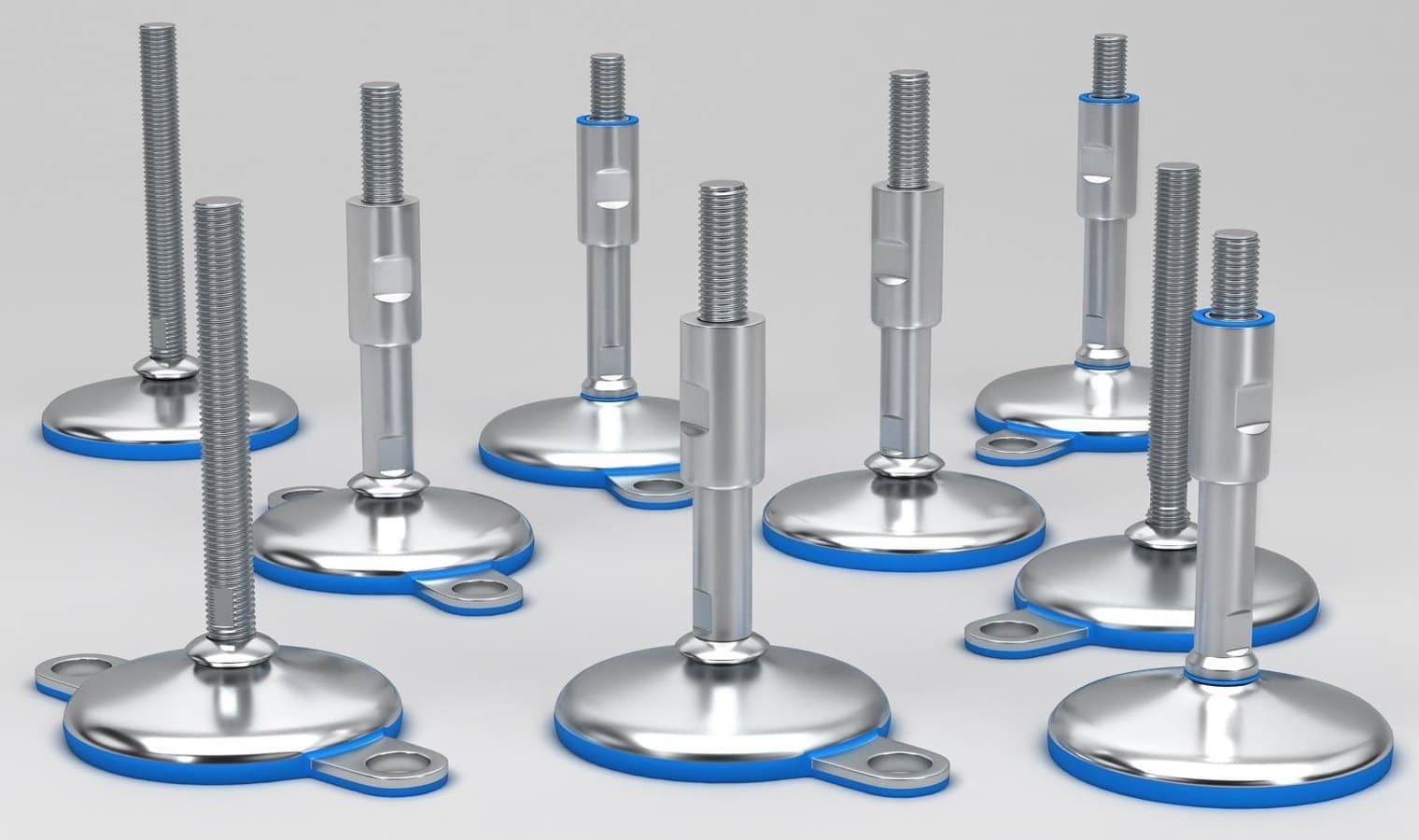
Down at floor level — where product residues collect and cleaning is hardest — an ordinary machine foot becomes a problem. Exposed threads and crevices trap food and water, zinc-plated or nylon parts corrode under daily cleaning, and the gap under the base plate hides what no one can reach. A hygienic levelling foot is designed so that none of that can happen anywhere.
The washdown challenge
Washdown zones are cleaned hard and often: high-pressure water, hot caustic and acid cycles and aggressive disinfectants. That regime attacks zinc-plated steel and breaks down many plastics — and anywhere water and residues can linger, bacteria can grow. The foot has to survive the cleaning and give the cleaning nothing to miss.
What makes a foot hygienic
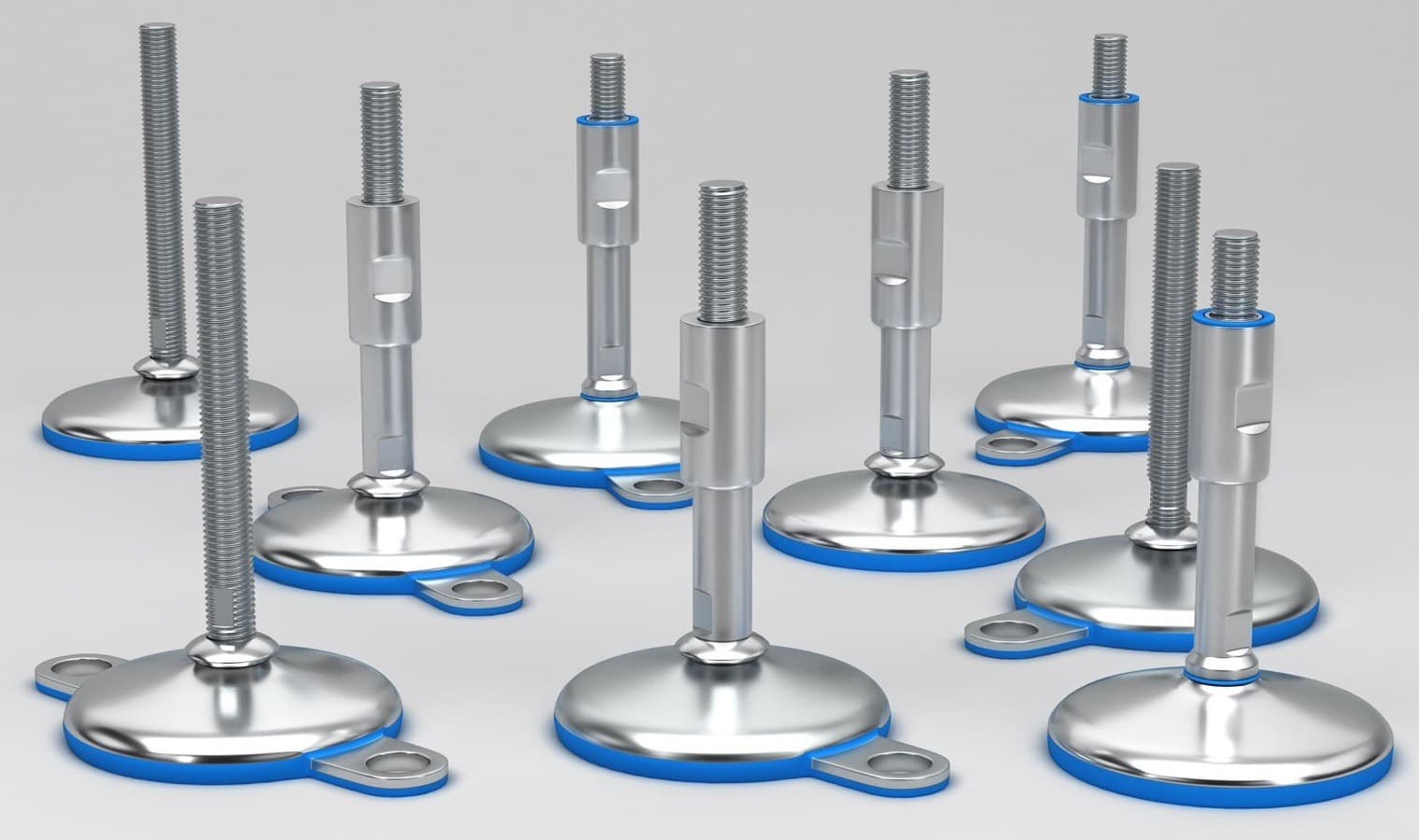
Hygienic design comes down to no traps and no rough surfaces anywhere:
- Sealed construction, so the adjustment thread and any internal cavities are closed off and not exposed to water.
- Smooth, crevice-free surfaces with a fine finish, so residues cannot cling to the surface.
- Sloping and rounded shapes that shed water instead of letting it stand, without flat ledges.
- A considered transition from base plate to floor: either sealed to the floor, or clear underneath so you can clean below it. The only thing to avoid is a half-open gap.
Stainless 304 versus 316
Both are stainless steel, but they handle aggressive environments differently:
| Grade | Best suited for | Notes |
|---|---|---|
| 304 | General food and cleanroom zones | Excellent corrosion resistance for most washdown duties |
| 316 | Salt, chlorides & aggressive disinfectants | Added molybdenum resists pitting corrosion; for brine, coastal sites and aggressive cleaning |
If chlorides or strong disinfectants are involved, specify 316 instead of 304.
Standards and cleaning
Hygienic design guidelines from organisations such as 3-A Sanitary Standards and EHEDG codify the principles above: crevice-free, self-draining and cleanable. When specifying levelling feet, ask for the stainless steel grade and the hygienic design features, and include the feet in the cleaning schedule: a hygienic foot still needs to be cleaned — it is simply designed so the cleaning can actually reach everywhere.
Seal it or lift it clear — never half-seal it. A foot sealed almost to the floor leaves a thin gap that traps water and residues and is impossible to clean. Seal it properly, or set it high enough that a hose and cloth can pass fully underneath.
Levelling feet built for washdown