
Protecting DKO connections
The metric 24° cone connection behind most European agricultural and mobile hydraulics — and how to keep the cone, thread and O-ring sealing tight.
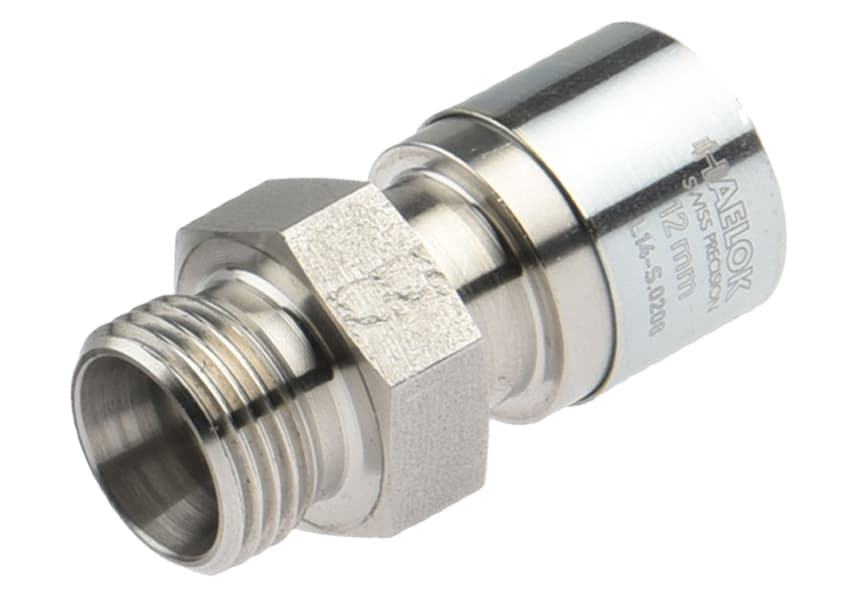
DKO is the metric hydraulic connection you will encounter most often on European machinery. Because it seals on a precision 24° cone and an O-ring, one knock, grain of sand or corrosion spot on that seat is already enough for a leak. This page explains how DKO seals, where it is used and exactly which surfaces the protection has to cover.
What is a DKO connection?
DKO, short for Deutscher Konus, is a metric hydraulic connection to the DIN 2353 standard (ISO 8434-1). It seals with a 24° cone combined with an elastomer O-ring, reliably preventing leakage under high pressure. The metric thread provides the mechanical connection; the cone and O-ring do the sealing. That is why the sealing surfaces — not the thread alone — determine whether the connection stays tight.
How it seals
- Metric parallel thread for the mechanical connection
- 24° cone seat as the primary sealing face
- Elastomer O-ring supporting the cone seal
- Light (DKOL) and heavy (DKOS) series for different pressures
Where DKO connections are used
DKO is the standard metric fitting in European hydraulics; machines of European build very often run on it. In agriculture it feeds the cylinder lines of front loaders, balers and sprayers. On mobile and construction machinery it serves the boom and attachment circuits of mini excavators and telehandlers. In industry it supplies the clamping and feed hydraulics of presses and injection moulding machines, and in materials handling the lift and tilt cylinders of forklift trucks.
How to check this is your application: if your machine uses metric DIN 2353 fittings with a 24° cone seat (the seat looks like a shallow funnel with an O-ring), then DKO protection is the right family. Then choose the cap or plug for the specific thread size.
What the protection must cover
Because the seal sits on the cone and O-ring, you judge DKO protection on whether those surfaces are covered — not just the thread. The risks it protects against:
- Contamination: dust, grit, moisture and paint residues settling in the cone and O-ring groove
- Mechanical damage: knocks and drops that dent the cone seat — even minor damage leaks
- Corrosion: moisture attacking the exposed sealing face during storage
- O-ring loss or damage: the elastomer damaged, aged or displaced before assembly
DKO at a glance
| Characteristic | Value |
|---|---|
| Standard | DIN 2353 / ISO 8434-1 |
| Thread | Metric parallel (typically M12×1.5 to M42×2) |
| Sealing angle | 24° cone |
| Seal | Cone seat plus elastomer O-ring (NBR / FKM) |
| Series | L (light, up to ~315 bar) and S (heavy, up to ~630 bar) |
| Tube sizes | 6 mm to 42 mm outside diameter |
| Region | Mainly Europe |
Does this protection suit your application?
Before ordering, check that DKO protection matches your situation:
- Connection: metric DIN 2353, 24° cone with O-ring
- Thread size: known and matching (L or S series, M12 to M42)
- Environment: outdoor, dusty or damp storage and transport
- Medium: mineral oil or biodegradable hydraulic fluid
- Phase: production, storage and transport, or service and maintenance
Recommended protection
These categories fit DKO connections:
Frequently asked questions
What does DKO stand for?
DKO is short for Deutscher Konus, a metric connection to the DIN 2353 standard. It seals on a 24° cone, supported by an O-ring.
In which sectors are DKO connections used?
Mainly in European agricultural machinery, mobile and construction hydraulics, industrial installations and hydraulic power units built to metric standards.
What needs protecting on a DKO connection?
The 24° cone seat, the metric thread and the O-ring groove. All three determine the seal, so the protection covers the entire sealing zone — not just the thread.
Do DKOL and DKOS need different protection?
They share the 24° cone principle but differ in thread and tube size. Protection is therefore chosen on the specific thread size, not on the series alone.
How do I get the right protection for a DKO connection?
Start with what needs covering on a DKO connection: the 24° cone, the metric thread and the O-ring groove. Choose a cap or plug for your thread size — the recommended protection above is the starting point. Then request free samples or a quote; our specialists will confirm the exact parts for your application.